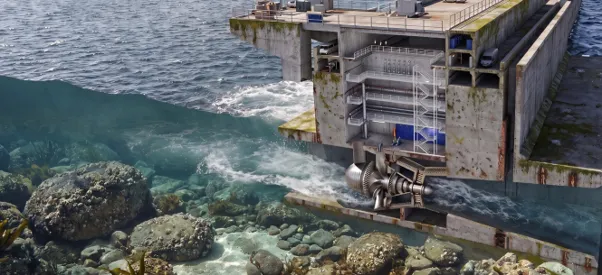
Plans for a potentially major new tidal lagoon off the South Wales coast have moved a step closer after Cardiff Capital Region approved up to £6.4 million to investigate whether the project could become a viable source of renewable electricity.
The proposed development, centred around Aberthaw in the Vale of Glamorgan, could eventually generate around 600MW of predictable renewable power – enough electricity for approximately half a million homes.
However, the project remains at an early stage. The funding does not represent approval to build the lagoon, but will finance exploratory development work designed to establish whether the scheme is environmentally, technically and commercially viable.
Cardiff Capital Region (CCR) plans to commit up to £6.4 million of City Deal funding over the next three years to the first substantive phase of the project.
The work will include environmental studies, engineering design, modelling and commercial assessments.
Why The Severn Estuary?
The Severn Estuary has one of the world’s highest tidal ranges, making it one of Britain’s most significant potential locations for tidal energy.
Unlike wind and solar generation, tides are highly predictable, potentially allowing tidal power to provide renewable electricity at known times and complement other forms of low-carbon generation.
If ultimately developed, CCR says initial estimates suggest the proposed lagoon could operate for more than 120 years.
The organisation also estimates that the project has the potential to generate around £3.5 billion in economic value, while supporting thousands of jobs and creating opportunities for companies throughout the supply chain.
Another potential benefit being examined is whether the lagoon could provide additional long-term protection for parts of the South Wales coastline against rising sea levels.
Cllr Mary Ann Brocklesby, Chair of Cardiff Capital Region, said:
“This represents a potentially game changing moment for renewable energy generation in the UK. The Severn Estuary has one of the highest tidal ranges in the world, with the potential to generate predictable, homegrown renewable energy that complements existing wind and solar power.
“In a time when energy security has become increasingly essential, the ability to access reliable and cost-effective renewable energy to power a significant number of homes, while placing Wales at the forefront of innovating in such an important sector, this is a generational opportunity. I am proud that CCR, along with our partners, are taking this exciting project forward.”
Aberthaw Identified As Potential Location
Aberthaw and the surrounding area have emerged as the preferred location for the demonstration project following work involving Cardiff Capital Region and the West of England Mayoral Combined Authority.
The work follows recommendations from the independent Severn Estuary Commission, which examined how the enormous tidal resource of the estuary could potentially be harnessed while taking account of its environmental importance.
The next stage is expected to use environmental and engineering co-design to determine the possible size and configuration of a lagoon.
Environmental, marine and ecological evidence will form part of that process alongside assessments of engineering feasibility and commercial viability.
Cllr Lis Burnett, Leader of the Vale of Glamorgan Council, said:
“South Wales, and Aberthaw in particular, have long played an important role in the UK’s energy story, and this project presents an opportunity for the site to help lead the transition to a low-carbon future. The potential to generate clean, reliable renewable energy, alongside creating jobs, attracting investment and supporting local supply chains, makes this an exciting prospect for the Vale and the wider region.
“We look forward to working with partners as the exploratory work progresses.”
Environmental Impact Will Be A Key Test
Any large tidal development in the Severn would also have to address the environmental sensitivity of the estuary.
Dr Andrew Garrad CBE FREng, who chaired the Severn Estuary Commission, said the area’s energy potential needed to be considered alongside protection of its natural environment.
“The Severn Estuary has immense energy potential and the Commission concluded that there is a compelling case to use that potential. Equally, it must be done in the right way – with the unique and internationally important environment of the Estuary remaining at the heart of how the project is designed and developed.
“I am delighted to see Cardiff Capital Region taking forward the Commission’s recommendation for a commercial demonstration project. This investment is an important next step in building the evidence, working closely with environmental organisations, and demonstrating how tidal range can deliver large-scale, clean, economic energy while respecting the Severn’s exceptional natural environment.”
The Welsh Government has also backed further investigation of the opportunity.
Adam Price MS, Cabinet Minister for Enterprise, Connectivity and Energy, said:
“Our vision is for Wales to become a world leader in marine renewables. With the second largest tidal range in the world, the Severn Estuary presents immense potential to deliver significant renewable energy generation and economic benefits for Wales.
“We will continue to work closely with partners to ensure we maximise the opportunities offered by this unique project as it progresses forward.”
UK Climate Transition Minister Katie White OBE MP said the work would help establish how tidal technology could contribute to clean power and future employment.
Secretary of State for Wales Stephen Kinnock MP also welcomed the development, pointing to its potential contribution to investment, economic growth and clean energy.
Could More Severn Lagoons Follow?
The significance of the Aberthaw proposal potentially extends beyond a single lagoon.
The project is intended to act as a commercial demonstration of tidal range technology on a substantial scale. If it can demonstrate that such a development is technically achievable, commercially competitive and environmentally responsible, it could help establish the case for further tidal lagoons around the Severn.
That makes the next three years of studies particularly important.
For now, no decision has been taken to construct the lagoon. The £6.4 million commitment will instead fund the detailed evidence needed to establish whether an ambitious concept can realistically progress towards becoming one of Wales’ largest new renewable energy projects.