Written by Christopher Rogers
I tend to get shouted at for saying this, but autumn is my favourite season. Yes, I know—here in Wales it’s been damp, and the temperatures have been unseasonably high—but I can’t help it. Something about the trees turning, the sunsets, and the business of changing the clocks stirs something within me. A twitch. A rumble. A need to get out there and simply—well—eat and drink.
Let me be clear (as our esteemed Prime Minister might say): I am built for comfort, not speed. That’s not to suggest I require door frames widening as I pass through, and I have just completed the Half Marathon in Champagne (no, not the one with all the food and drink on the way round—though you do get Champagne at the finish, as is only right). Still, autumn is one of many reasons I shall never be described as svelte.
It is almost a legal requirement at this point to quote Keats and his “season of mists and mellow fruitfulness”—but it’s true. Autumn is the time for deep red wines, characterful whites, and generous glasses of smoky whisky or enveloping Cognac. Add mushrooms, squash, truffle, mutton and venison to the mix and it becomes a season worth embracing wholeheartedly—and with appetite.
As a creature of habit, I have always gravitated towards Pinot Noir and Chardonnay at this time of year. But having spent nearly thirty years in the wine trade encouraging others to experiment, I decided it was time to follow my own advice. So off I went to my local supermarket—Morrisons, in this instance—to see what might tempt me.
As a confirmed Old World devotee, I headed straight to the New. The shelves were reasonably well stocked, if perhaps a little less abundant than in the halcyon days before the cost-of-living crisis. Bordeaux’s twin red powerhouses—Cabernet Sauvignon and Malbec—ruled the roost.
Both grapes made their way to the New World after the great Phylloxera disaster of the 19th century—a tiny American root-eating louse that devastated European vineyards. Growers leaving Bordeaux for new lives abroad took cuttings with them, and so we find these grapes flourishing in places like Chile and Argentina, where generous sunshine and dramatic altitudes have helped them thrive.
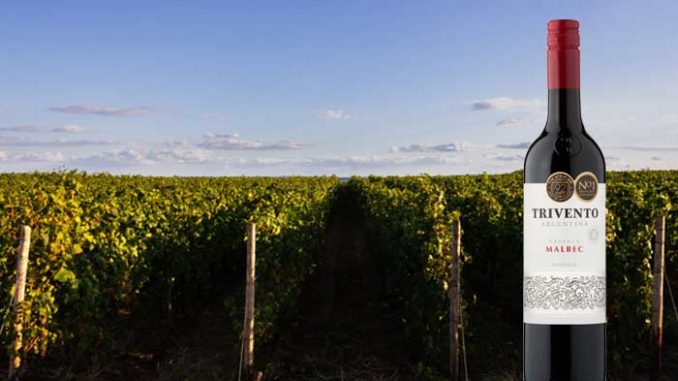
Judging by the empty shelf, one Malbec in particular appeared to be flying: Trivento Reserve Malbec 2024. Festively dressed in a jaunty Christmas label and reduced to £7.50 with a Morrisons card (from £8.50), it clearly had fans. The wine hails from Mendoza, where vines grow high on alluvial plains around 900 metres above sea level. The poor soils encourage deep root systems and, combined with cool nights, give the grapes a longer ripening season and greater complexity.
In the glass, it’s a deep purple-red. The nose is appealingly dark-fruited with spice and a hint of leather. On the palate it’s medium-bodied, balanced, with gentle tannins and good freshness. And, pleasingly, it’s under screwcap—perfect for those evenings when one glass turns into one and a half and you tell yourself you’re being sensible by re-sealing the bottle.
Now, confession time: I don’t usually like Argentinian Malbec. Too often I find it overwhelming—like being beaten about the face with a side of beef. But this one? I found myself drifting back to the kitchen for another glass. Most unexpected. Rather delightful.
This is a wine for anyone looking for a comforting glass of red—ideal for sipping after work, post-walk, or once the children are in bed. It would pair happily with charcuterie, pork, chicken, mushrooms and hearty autumn sauces.
So there we are: I have learned something new, and that in itself deserves celebration. I shall raise a glass to you all and nestle back onto my sofa as the evening draws in.
Cheers.
Chris