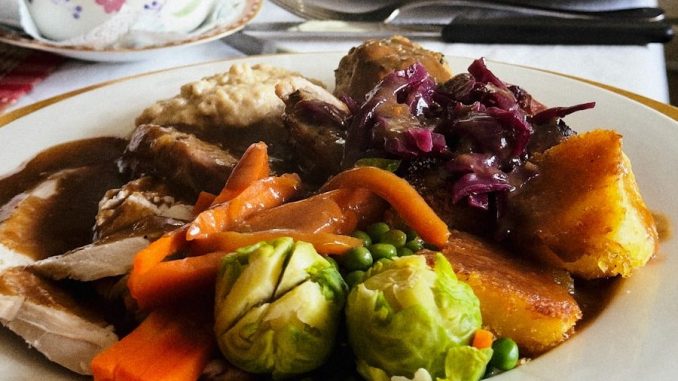
- One in five Brits admit to ‘soaking’ their plate in gravy
- Half say the jug belongs in the centre for self-service
- ‘Watery gravy’ called out as the worst gravy crime
- Younger cooks drive a revival in scratch-made gravy
As Christmas approaches and roast dinners return to the centre of family tables, new research has revealed a striking divide in how the nation enjoys its gravy. Almost one in five Brits (19%) admit to being “soakers”, pouring so generously that their plate is awash, while nearly half (44%) prefer a more balanced pour that coats food without overwhelming it.
The findings, from a nationally representative survey of 2,000 adults commissioned by Borough Broth, the British organic bone broth producer, highlight how passionately the country feels about its favourite festive accompaniment. Geography adds another layer to the divide: Londoners are the most restrained, with only 10% identifying as soakers, whereas the South East has emerged as the nation’s stronghold of excess, where almost a quarter (24%) flood their roasts in gravy.
“Roast dinners are known for bringing people together, but this research shows gravy can be surprisingly divisive,” said Ros Heathcote, CEO and Founder at Borough Broth. “Whether that’s portion size, etiquette, or preparation, gravy sparks strong feelings. It’s a small detail that makes a big difference to the meal, and no Christmas table feels complete without it.”
Traditional etiquette is shifting
What counts as good gravy manners is evolving. It was once considered more formal for the home host to serve, however almost half of respondents (49%, but rising to 65% of those over 55) now believe the jug belongs in the centre of the table for self-service. But even with the jug within reach, shortages remain a point of contention. More than a quarter of people (28%) say the volume of gravy served at home is occasionally in short supply, while 19% report it is ‘often lacking’ or ‘almost always stingy’ – most common city-wise in Cardiff (24%) and regionally in Greater London (25%). When the jug runs dry, responses vary: just over a quarter (28%) say they feel completely comfortable asking the host for more, though one in ten (10%) admit they would be too embarrassed to speak up. Men (32% compared with 25% of women) and older adults (33% of over-55s) are the most willing to request extra helpings
How Brits make their gravy
The research also sheds light on how Britain is preparing its gravy. While convenience still plays a role, three in ten households (30%) are making gravy from scratch using meat juices and stock or bone broth, and a further quarter (24%) combine homemade efforts with instant shortcuts. One in five (20%) rely entirely on instant options. A generational divide is clear: younger adults are leading a scratch-made revival, with more than a third of 25-34 year-olds (37%) choosing to make their own, compared with just 27% of 45-54 year-olds, who are just as likely to favour instant alternatives.
Despite the variations in preparation, most Brits take a modest view of their own ability. A third (34%) describe their gravy as “average” and another 32% as “decent”. Only a confident 18% claim the title of “gravy master”, rising to 24% of those in the North East. Additionally, a quarter of younger cooks (25-34 year-olds) were happy to claim the expert level of gravy mastery.
Gravy crimes called out
But while many are confident in their methods, there was strong agreement on what makes a ‘gravy crime’. The top five crimes called out were:
- 1st place – Watery gravy (45%)
- 2nd place – Adding ketchup or brown sauce (26%)
- 3rd place – Incorporating fruit (26%)
- 4th place – Serving gravy alongside non-traditional meals e.g. pizza or pasta (25%)
- 5th place – Leaving it to develop a thick skin across the top (24%)
Secret ingredient wars
The survey also explored the flavour boosters that home cooks use to enrich their gravy. Among those who make it themselves, bone broth is now chosen by more than one in five (21%) as their preferred “secret ingredient”, putting it on par with red wine (24%) and stock cubes or liquid stock (24%). Bone broth’s popularity is strongest among younger cooks and women, with usage peaking among 25-34 year-olds (28%), women (24%), and in the North West (29%) and Wales (26%).
Heathcote concluded: “It will be interesting to see how traditions continue to evolve as younger home cooks experiment more with homemade methods and ingredients like bone broth. As festive tables change with each generation, it’s encouraging to see a renewed focus on quality and flavour, which suggests that gravy will remain a much-loved part of British celebrations for years to come.”