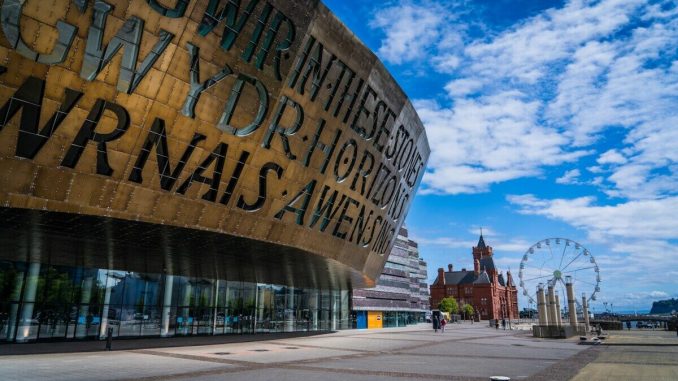
Cardiff has been quietly building a reputation as a hub for sustainability-focused businesses. From eco-friendly retail brands to clean energy initiatives, the rise of green startups across the city reflects a broader UK-wide push toward net zero. But beneath the momentum lies a more complicated question: is this a genuine long-term opportunity, or just another overhyped trend driven by policy incentives and shifting consumer sentiment?
The answer sits somewhere in between—and understanding that nuance is key for anyone thinking about entering the space.
A Surge Driven by Policy and Public Demand
The growth of green startups in Cardiff is not happening in isolation. It is being shaped by national climate targets, local council initiatives, and a noticeable shift in consumer behaviour. Buyers are increasingly aware of sustainability claims, and many are actively choosing brands that align with their values.
This has created opportunities across several sectors:
- Renewable energy solutions
- Sustainable packaging
- Plant-based food and wellness products
- Circular economy ventures (repair, reuse, resale)
For founders, the barrier to entry has also lowered. Digital tools allow small teams to launch quickly, test ideas, and reach niche audiences without heavy upfront investment. In theory, this makes Cardiff an ideal environment for green entrepreneurship.
The Funding Advantage—With Conditions
One of the strongest arguments in favour of green startups is access to funding. Government-backed grants, sustainability incentives, and impact-focused investors are more willing to support environmentally conscious ventures than ever before.
However, this funding is not as easy to secure as it may seem.
Many early-stage founders assume that “green” automatically means “fundable.” In reality, investors are becoming more cautious. They are looking for:
- Clear business models
- Measurable environmental impact
- Scalability beyond local markets
Startups that rely purely on the sustainability label, without strong fundamentals, often struggle to move beyond the idea stage.
The Risk of Greenwashing and Market Saturation
As the trend gains popularity, another issue has emerged: saturation. Cardiff is seeing a growing number of businesses positioning themselves as eco-friendly, but not all of them deliver meaningful impact.
This creates two problems.
First, consumers are becoming more sceptical. Vague claims like “eco-conscious” or “sustainable” are no longer enough. Businesses need transparency—clear sourcing, production methods, and measurable outcomes.
Second, genuine green startups face tougher competition. Standing out now requires more than just a sustainability angle; it requires innovation, credibility, and often third-party validation.
In this sense, the market is maturing. What once felt like an open opportunity is becoming more competitive and demanding.
Operational Challenges Are Often Underestimated
Beyond branding and funding, there are practical challenges that many founders underestimate.
Sourcing sustainable materials, for example, can be significantly more expensive than conventional alternatives. Supply chains are less established, and local options are sometimes limited. For a startup operating on tight margins, this can quickly become a constraint.
Energy costs also remain a concern. While green startups aim to reduce environmental impact, operating sustainably does not automatically mean lower expenses—at least not in the early stages.
These realities don’t make the sector unviable, but they do highlight the importance of careful planning and realistic expectations.
Why Structure Matters More Than Ever
As green startups move from concept to execution, one factor becomes increasingly important: business structure.
Many founders begin as sole traders, testing their ideas with minimal risk. But as they grow—especially if they seek funding or partnerships—formalising the business becomes essential.
A limited company structure can offer:
- Greater credibility with investors
- Clear separation between personal and business finances
- Flexibility in scaling and ownership
This is where platforms like Your Company Formations come into the picture, helping founders transition from informal operations to structured businesses. While company formation is just one step in the journey, getting it right early can prevent complications later.
So, Opportunity or Overhyped?
Calling green startups in Cardiff “overhyped” would ignore the very real shifts happening in both policy and consumer behaviour. Sustainability is not a passing trend—it is becoming a baseline expectation.
However, the idea that any green business will succeed simply because it is sustainable is clearly overstated.
The reality is more balanced:
- Opportunity exists, especially for startups that combine sustainability with strong business fundamentals
- Competition is increasing, making differentiation essential
- Execution matters more than positioning, particularly as the market matures
The Bottom Line
Cardiff offers a promising environment for green startups, but it is no longer an easy win. The early advantage of being “eco-friendly” is fading, replaced by a more demanding landscape where credibility, efficiency, and scalability define success.
For aspiring founders, the takeaway is simple: sustainability can open doors, but it won’t carry a business on its own. Those who treat it as part of a broader, well-structured strategy—rather than a shortcut—are far more likely to succeed.
And in that sense, the green startup movement in Cardiff is not overhyped. It is simply evolving.