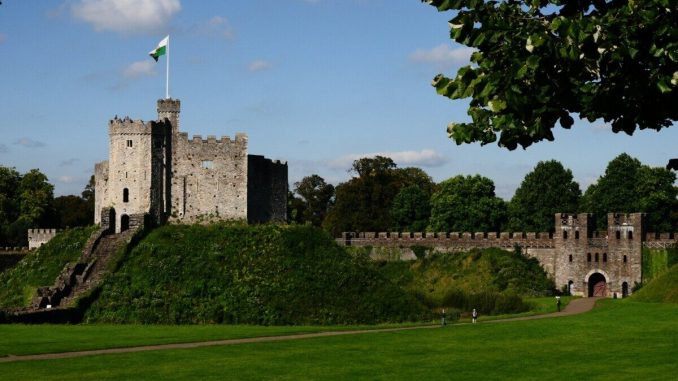
Cardiff Castle is one of the most famous historic landmarks in Wales and a major tourist attraction in the capital city, Cardiff. The castle has a history that stretches back nearly 2,000 years, making it an important site for understanding Roman, Norman, medieval, and Victorian history all in one location. Situated in the heart of the city, it attracts visitors from around the world who come to explore its towers, walls, and richly decorated interiors.
The earliest origins of Cardiff Castle date back to Roman times, when a fort was built on the site around the late 1st century AD. The Romans chose the location because of its strategic position near the River Taff, which allowed them to control movement and defend the area. Although the original Roman structures are no longer fully visible, parts of the old walls remain and can still be seen today within the castle grounds. These remains provide valuable evidence of Cardiff’s ancient past.
After the Romans left Britain, the site eventually became important again during the Norman conquest of Wales. In the 11th century, the Normans built a motte-and-bailey castle on the same site. This type of castle included a wooden fort on a raised earth mound, later replaced with stone structures for stronger defence. The Normans used Cardiff Castle to maintain control over the surrounding region and establish their authority in South Wales. Over time, the castle was strengthened and expanded, becoming an important military and administrative centre.
During the medieval period, Cardiff Castle continued to develop. The castle walls, towers, and gatehouses were rebuilt in stone, making it more secure against attacks. It played a key role in regional conflicts and changed hands several times between different Welsh and Norman rulers. Despite periods of warfare and damage, the castle remained an important symbol of power in the region.
In the 18th and 19th centuries, Cardiff Castle underwent a dramatic transformation when it was inherited by the wealthy Bute family. The third Marquess of Bute, in particular, commissioned major renovations that turned the castle into a lavish Gothic Revival residence. The architect William Burges was responsible for designing the interior rooms, which are richly decorated with colourful murals, intricate carvings, and detailed symbolism inspired by mythology, religion, and history. These rooms are considered some of the finest examples of Victorian architecture in the United Kingdom.
Outside the castle, extensive grounds were also redesigned into beautiful landscaped gardens. Visitors today can walk along the castle walls, explore towers, and enjoy peaceful green spaces in the city centre. The castle also includes a military museum, exhibitions, and guided tours that explain its long and complex history.
Today, Cardiff Castle is managed as a major heritage attraction and is used for cultural events, concerts, and festivals. It stands as a symbol of Welsh history and identity, showing how the city of Cardiff has evolved over nearly two millennia. Its combination of Roman ruins, Norman fortifications, and Victorian luxury makes it unique among castles in the United Kingdom.
In conclusion, Cardiff Castle is not just a historic building but a layered record of Welsh history. Its long evolution reflects the changing political, social, and cultural landscape of Wales, making it one of the most important landmarks in the country.