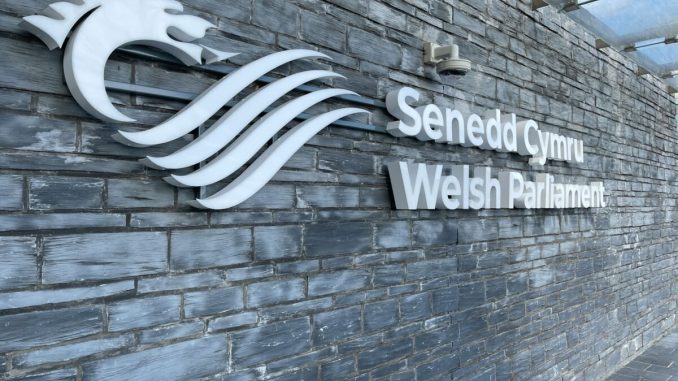
A petition calling for emergency financial and structural support for homeowners affected by Reinforced Autoclaved Aerated Concrete (RAAC) in Hirwaun’s Gower Estate will be formally reviewed by the Senedd’s Petitions Committee on Monday 8 December 2025 at 14:00, with the session broadcast live on Senedd.tv.
The petition, P-06-1549, went live on 12 June 2025 and highlights what campaigners describe as a worsening financial and safety crisis for the 77 homes identified with RAAC on the estate — including 14 privately-owned properties purchased through the Right to Buy scheme.
Just days ahead of the Committee session, Wilson Chowdhry, Chairman of the UK RAAC Campaign Group and the petition’s lead organiser, received confirmation that the petition would finally be heard, calling it a long-delayed opportunity to place the truth of the crisis on record.
A Growing Crisis
RAAC — a lightweight, porous concrete used widely between the 1950s and 1990s — has been linked to sudden collapses in schools and hospitals across the UK. Its discovery in the Hirwaun estate in early 2024 triggered fears about the long-term safety and financial viability of affected homes.
Residents now face:
-
Average repair costs of around £23,000, despite many specialists describing the available solutions as only temporary
-
Mortgage lenders refusing to refinance, leaving some owners as mortgage prisoners
-
Insurance policies excluding RAAC-related damage, offering no safety net
-
Properties originally built cheaply by the local authority, later transferred through Trivallis and sold to private buyers without disclosure of structural concerns
The petition calls on the Welsh Government to take decisive action, including creating a national RAAC remediation fund, reforming building regulations to impose 50-year guarantees on high-risk materials, establishing a high-risk property register, and launching a public inquiry into past failures.
It also cites long-ignored historical warnings — including more than 400 RAAC-related demolitions in Basildon in the 1990s and 86 condemned homes in West Lothian in 2004 — to argue that the dangers have been known for decades.
What the Senedd Briefing Confirms
The official Senedd briefing prepared for the Petitions Committee outlines the current position:
-
RAAC has been confirmed in 77 homes in the Gower Estate — the only Trivallis properties of this construction in Wales
-
Trivallis is carrying out remediation work on its social homes between October 2024 and April 2027
-
Private homeowners may access Trivallis contractors, but no mechanism exists to ensure affordability
-
RCT Council offers grants up to £6,500, though only two households are currently eligible
-
Additional council support includes access to a Support Worker and Public Health team
Campaigners argue that these measures fall significantly short of what is needed to address structural issues that may require full rebuilds, not minor repair works.
Meanwhile, Scotland — facing more than 3,000 RAAC-affected homes — has already established a national RAAC in Housing Leadership Group and approved funding flexibilities. Aberdeen has secured £10 million for buybacks based on pre-RAAC valuations.
Wales has yet to offer comparable support.
Welsh Government Response: Acknowledgement Without Commitment
In a letter dated 14 November 2025, Cabinet Secretary for Housing and Local Government, Jayne Bryant MS, responded to the petition.
She acknowledged:
-
The seriousness of the issue
-
The need for some homeowners to receive support
-
Ongoing discussions with devolved administrations and the UK Government
-
Trivallis’s efforts to include private owners in remediation work
However, her response did not include commitments to:
-
A national remediation scheme
-
Direct financial support for private homeowners
-
Interest-free loans
-
Regulatory changes
-
A public inquiry
-
A high-risk property register
Instead, Bryant reiterated that “building maintenance is ultimately the responsibility of property owners” — a statement campaigners argue is incompatible with properties built by public bodies and later sold without disclosure of known structural risks.
Next Steps: A Critical Meeting on 8 December
The Petitions Committee could recommend:
-
Additional evidence sessions
-
A Senedd chamber debate
-
Calls for new funding streams
-
Referral to oversight or scrutiny committees
For residents, the outcome represents far more than procedure — it could determine whether they receive financial relief or remain trapped in unsafe, unsellable homes.
A National Issue With UK-Wide Implications
RAAC in housing is emerging as a structural emergency across Britain:
-
2,445 social homes affected in Scotland
-
Around 700 private homes confirmed UK-wide
-
Hundreds more under investigation
-
Demolitions recorded since the 1990s
Campaigners warn that what happens in Hirwaun may set a precedent for thousands of households facing similar risks.
Residents Want Safety, Stability and Fairness
Affected homeowners say they are not seeking extraordinary help — only:
-
Safe homes
-
A viable financial route to repair
-
Recognition of historic failings
-
Protection from falling into debt or homelessness
Campaigners argue that the Welsh Government must decide whether to continue leaving homeowners to shoulder the burden alone, or to intervene meaningfully.
Campaign Group: “We Must Ensure Every Response Is Properly Considered”
Lead petitioner Wilson Chowdhry said:
“It is important to note that the Welsh Government’s email regarding the response deadline unfortunately went to my junk email folder, meaning I only became aware of it recently. A formal response has been submitted today, 5 December 2025, and I will be seeking and pleading with the relevant officials to ensure that it is shared with all participants and properly considered in the Petitions Committee process ahead of the 8 December meeting.”
-
Sign and share the UK Parliament petition: [https://petition.parliament.uk/petitions/701337]
-
Sign and share the Welsh Government petition: [https://petitions.senedd.wales/petitions/246606]