Environmental campaigners say recent policy progress on plastic pollution is a positive step forward for the UK’s rivers and coastlines – but local clean-up efforts across Wales show the scale of the challenge that still remains.
According to the marine conservation charity Surfers Against Sewage, several developments in 2026 mark significant progress in tackling plastic pollution and chemical contamination in UK waters. Among the most notable is the confirmation that plastic-containing wet wipes will be banned across the UK, with sales set to become illegal from May 2027.
Wet wipes have become one of the most persistent forms of plastic pollution, frequently entering waterways through sewage systems before breaking down into microplastics. These fibres can remain in the environment for decades, entering rivers, estuaries and marine ecosystems.
Campaigners have also welcomed the UK Government’s first national strategy to address PFAS chemicals – often referred to as “forever chemicals”. These substances are widely used in products such as waterproof clothing and food packaging and are known for their ability to persist in the environment for centuries while accumulating in wildlife and human food chains.
While these policy developments are seen as a step forward, environmental groups stress that community action remains crucial in tackling pollution already present in the environment.
In Cardiff, volunteers have been continuing the effort through organised litter picks around the River Taff and Cardiff Bay. A major clean-up initiative along the river corridor attracted more than 1,300 volunteers at multiple locations stretching from Brecon to Cardiff Bay, setting a new world record for the largest river clean-up event.
During the Cardiff Bay section of the clean-up alone, volunteers including groups of schoolchildren from Welsh schools helped to remove dozens of bags of waste including plastics, general rubbish and nitrous oxide canisters. The scale of the debris highlights the continuing challenge faced by waterways flowing into the capital’s waterfront.
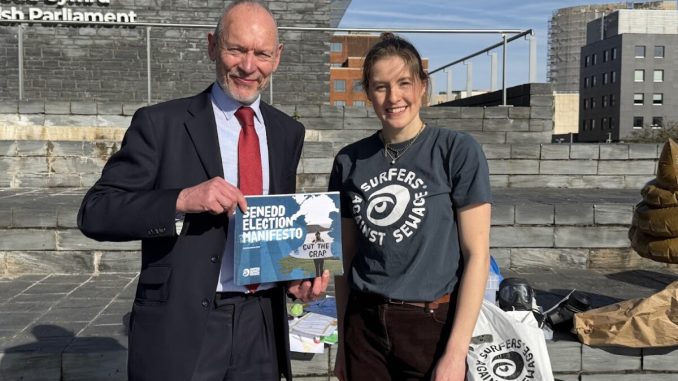
Group representatives also stood outside the Senedd and spoke with MSs about their proposals ahead of the Senedd elections, ncluding Newport East MS John Griffiths.
John Griffiths MS said:
“Pollution is a major issue, along with sewage in our rivers and in our seas. I am pleased to be here today to recognise and support the wonderful work done by the charity Surfers Against Sewage, and would like to also praise all the volunteers and schoolchildren helping with the local clean up today.”
Community groups such as the Cardiff Rivers Group and environmental volunteers regularly organise litter picks along rivers, streams and waterfront areas across the city, helping remove plastic waste before it reaches the Bristol Channel. The volunteer-run organisation, founded in 2009, hosts regular clean-up events aimed at improving local waterways and habitats.
Surfers Against Sewage says initiatives such as its nationwide “Million Mile Clean” programme demonstrate the growing public appetite to tackle pollution at a grassroots level. The campaign mobilises tens of thousands of volunteers across the UK each year to remove litter and record pollution data that supports wider environmental campaigns.
Campaigners argue that the combination of stronger national policies and sustained local action will be essential if the UK is to significantly reduce plastic pollution in the years ahead.
Source:
https://www.sas.org.uk/updates/uk-plastic-pollution-policy-wins-2026/