ROBERTSON GEO has played a key role in supporting a £1.5 billion hydroelectric scheme by delivering crucial geotechnical data.
The Coire Glas project, located on the shores of Loch Lochy near Inverness, is set to become the UK’s first hydro storage project of its scale since the construction of Dinorwig Power Station in the 1980s.
Contracted by Strabag UK Ltd, the Conwy-based specialist in borehole geophysical and petrophysical logging technologies was tasked with conducting an in-depth ground investigation for the ambitious development, led by energy company SSE Renewables.
With a potential generation capacity of up to 1300MW, Coire Glas could supply electricity to as many as three million homes within minutes of activation.
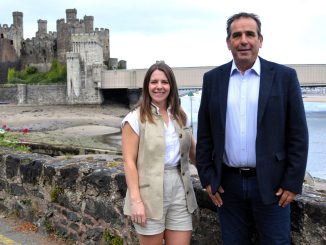
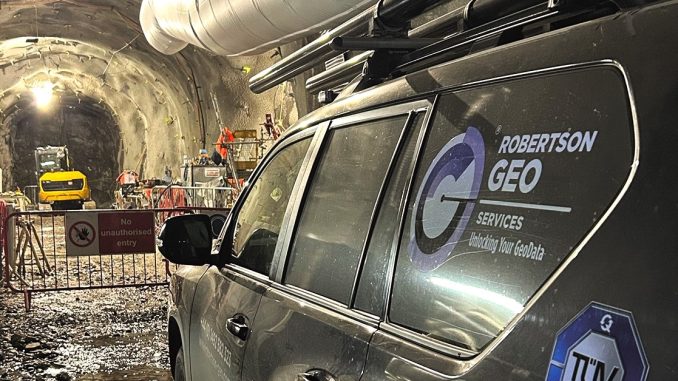
Simon Garantini, Managing Director of Robertson GEO, which also operates in the US and Hong Kong, explained that the company deployed an array of geophysical probes inside an exploratory tunnel more than one kilometre long and 700 metres deep.
A technically demanding operation, the project required the use of equipment and techniques never previously employed by the team, including a 2,000m winch housed in a safety cage.
“The exploratory work being undertaken for Coire Glas is among the most extensive ground investigations of its time, collecting and analysing a huge volume of geotechnical data before construction begins,” said Simon.
“The comprehensive scope of the ground investigation is not least required due to the site’s proximity to the Great Glen fault line, which is visible from outer space.
“The geotechnical data will observe ground conditions to inform on the potential risks and challenges posed to a successful delivery of the project, so this was a hugely important task, pivotal to them moving forward.”
The tunnel featured three “galleries” from which a network of long, near-horizontal and angled boreholes were drilled, along with shorter “televiewer” boreholes used for imaging, stress testing, and deformability analysis.
The demanding schedule saw operations running 24/7, with two engineering teams working in alternating 12-hour shifts.
“Logistics underground could be difficult with equipment needing to be moved around underground whilst many other tasks were occurring simultaneously,” said Simon.
“The most challenging aspect of the logging operation was the development and deployment of a ‘push’ system to place logging tools in horizontal boreholes.
“Our team has considerable experience in using them on horizontal boreholes up to about 40m in length. However, these were up to around 280m so the magnitude of the task could not be underestimated.”
He continued: “There were other challenges – notably in designing a push system for the raised boreholes up to 22m in length – but a manual arrangement using customised tubular push rods was engineered, which worked successfully.
“The work environment was noisy at times with the inevitable dripping water on sensitive equipment such as laptops, though together we resolved all these issues.
“The geophysical logging campaign we undertook formed a vital component of the overall ground investigation, providing high-quality calibrated data, not attainable by other means, at centimetre resolution in the boreholes.”
Operating in more than 160 countries and supported by over 25 approved agents, Robertson GEO continues to deliver geophysical services and manage borehole logging equipment rentals worldwide.
For more information, visit their website: Geotechnical – Robertson Geo | Wireline Borehole Logging.